· 7 min read D&D 5e
Let Your Players Shop Between Sessions
Shopping episodes drag because they make four players wait while one buys. The fix is not to cut shopping. It is to move it off the clock, between sessions.
Shopping episodes drag because they make four players wait while one buys. The fix is not to cut shopping. It is to move it off the clock, between sessions.
The party rides into town with pockets full of goblin gold and a shopping list four items deep, and you know exactly how the next forty minutes go. The fighter wants armor. The wizard wants to know who sells scrolls. The rogue is doing math on poison. They cannot all do it at once, because there is one merchant, one price list, and one of you to run it, so they take turns. The fighter haggles over a breastplate while the other three check their phones. The wizard finally reaches the counter and asks about scrolls you never thought to stock. Somewhere in the second half hour the player who was most excited to shop has stopped listening, and you are reading prices off a list you wrote at midnight, doing markup in your head out loud, watching the session you prepped drain away one transaction at a time.
Notice something before you decide shopping is the problem: nobody at that table dislikes shopping. They dislike waiting. Shopping is the one thing you do in the game that is fundamentally solo, and you have been running it as a group event, in real time, with everyone made to watch. Combat gives every player a turn that changes the board. A shopping scene gives one player a turn and asks the other three to sit through it. The buying is fun. The queue is not.
So do not cut shopping. Move it off the clock.
The forty minutes is not the price of shopping. It is the price of doing it synchronously, all together, in the one slot of the week you have everyone in the same room. Every player who is not at the counter is spending live table time on someone else’s transaction, and live table time is the scarcest thing your group owns. A few hours a week, if you are lucky. Spending a third of it queued up to buy rope is a bad trade, and everyone at the table feels it even when nobody names it.
You feel it worst, because the format turns you into a cash register. The merchant with the gravelly voice and the shady past flattens into a person reciting numbers and multiplying by one and a half. Every question is a lookup. Every haggle is a ruling you make on the spot with four people watching. The dullest job at the table is the one the GM gets stuck with, and the reward for getting stuck with it is that plenty of tables give up on gear entirely, handwave the economy, and throw out something the players loved to escape the part they hated.
Because the thing they loved is real. Shopping is one of the few moments in the game where the players drive completely: they choose what to look at, what to want, what to spend, what to walk past because something better is one fight away. Kill things, get gold, turn gold into the sword that makes the next fight yours. That loop is a good part of why people show up, and the shop is where it pays off. The difference between a shop that dispenses goods and a shop that makes players want things is the difference between a vending machine and a reason to ride into town.
Cut shopping to save time and you save it by deleting the payoff. The gold piles up with nowhere to go, magic items stop feeling earned, and the “what should we buy before the dungeon” conversation, half the fun of downtime, never happens. The goal is the same shopping without the queue, and that means the shop has to run while you are not standing behind the counter.
A shop you are not attending has to answer every question a player puts to it, because you are not there to answer for it. That changes how you build it.
Haggling is the first thing to go, and it should. Haggling is a live social game: a player makes a case, you react, a die gets rolled, a price bends. None of that can happen with a shop that is asleep at two in the morning when the ranger finally sits down to spend her cut. So the number on the tag has to be the real number, a fair markup you set once and let stand. Haggling becomes something you grant at the table for a great roll, not the machinery every routine purchase runs on.
What keeps an unattended shop from turning into a literal vending machine is scarcity. Stock the breastplate once, quantity one, and watch what the shop does without you: two players want it, the one who logs on first gets it, and the other learns that “I’ll buy it next week” was a decision with a cost. The stock refereed that, not you. Limited quantities turn a price list into a set of real choices, and they hold whether or not you are in the room.
Selling needs a rule too, since “what’s it worth” is the question most likely to stall a transaction. Publish a flat buyback, half of value or whatever suits your economy, and a player can offload the +1 dagger nobody attuned to without waiting on your say-so.
All of this hands control to the shop, which can feel like handing away your authorship of the world. It is not, because you keep the lever that matters: when the shop exists. You decide the moment a merchant appears. Build the shop in advance, keep it dark, and switch it on the instant the party walks through the door. The drama of discovery was never in the transaction. It was in the reveal, and the reveal stays yours. Gate the one genuinely rare item behind it, and the shop lands like an event even though the buying happens on everyone’s own time.
This is the shape of it in ScryRPG. You build a shop once: the items, a markup, a buyback, and whether the stock returns on a schedule or is one of a kind. You keep it hidden while you tune it. When the party reaches town, you reveal it, and every player gets a ping that a new shop is open for business.
From there it runs itself. A player opens the shop from the web, or from Discord, in the same channel where the table argues about initiative between games. They pick the breastplate and buy it. The gold comes off that character’s sheet, the armor lands in that character’s pack, the stock drops by one, and everyone sees it move. Nothing pauses, and you never reach for a calculator. The restock schedule carries your scarcity for you: weekly for potions, never for the masterwork blade, so the blade is gone the moment someone claims it and the next player learns to be quicker. You set the conditions once. The shop keeps them.
The full setup is a few minutes of work: stock, pricing, restock rules, and the reveal toggle. A shelf of ready-made shops cuts it to a few clicks. Either way the merchant stays open around the clock, and you are not the one working the register.
The party rides into town, same as before, pockets full of goblin gold. Except the fighter bought her armor on Tuesday, the wizard found his scrolls between sessions, and the rogue settled her poison math from the couch. Nobody is queued at a counter. The forty minutes you would have spent multiplying prices out loud goes to the dungeon they came for, the reason everyone cleared their evening in the first place. The shopping still happened. It just did not happen at the table.
Build the shop once, reveal it when they arrive, and let the table shop on its own time. Start from a few ready-made examples, or deploy one to your party.
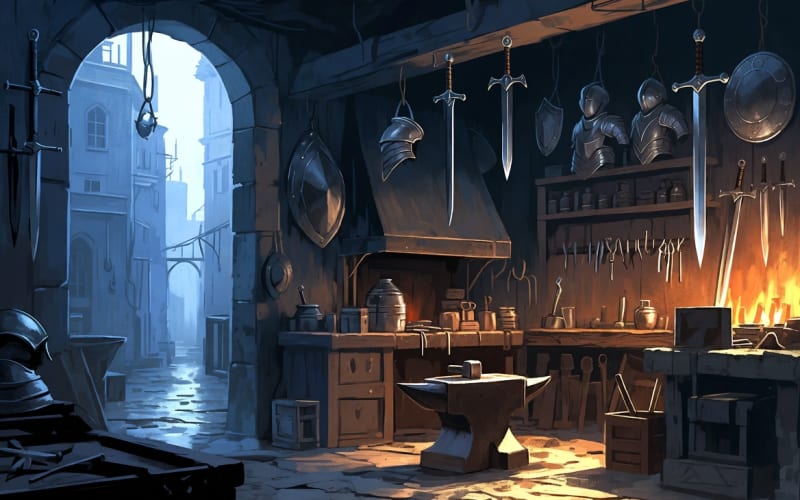
Complete inventories with items, prices, shopkeepers, and mystery goods you can drop into any D&D session.
Party inventory does not break at the table. It breaks between sessions, when the notes stop matching the game. The fix is keeping the record where your table talks.

Why mystery items deserve a place in your game, and how to make the reveal land at the table.